
Table of Contents
- What Makes a Personalized Divot Tool Worth Carrying
- Best Golf Divot Repair Tool: Materials and Construction That Last
- Custom Golf Divot Tool Options: Engraving, Logos, and Design Choices
- Golf Divot Tool With Ball Marker: Dual-Function Accessories That Work
- How to Repair a Ball Mark on a Green: The Right Technique
- Single-Prong vs. Two-Prong Design: Why Tool Profile Matters
- Pricing, Warranties, and Buying a Divot Tool That Lasts
- Frequently Asked Questions
Last Updated: October 14, 2026
What Makes a Personalized Divot Tool Worth Carrying
A personalized golf divot repair tool isn't just an accessory, it's a statement about how seriously you take your game and the condition of the greens you play on. Most golfers carry whatever divot tool came free with their golf bag, rarely thinking about whether it actually repairs ball marks correctly. That's the first mistake.

The difference between a standard divot tool and a precision-engineered one comes down to design, material, and intent. A quality personalized divot repair tool performs better because it's built with the specific mechanics of green repair in mind. When you repair a ball mark incorrectly, you damage the grass roots and leave the green worse than you found it. A proper divot tool prevents that.
At Sunday Birdie, we've engineered our divot tools to fix ball marks the right way every time. CNC-machined from solid brass or aluminum, our tools deliver the weight and precision you feel the moment you hold them. That's not marketing, that's engineering. A personalized divot repair tool also becomes a conversation starter on the course. Every round, someone asks where you got it.
The value of personalization goes beyond aesthetics. When you carry a tool with your name, initials, or a custom design, you're less likely to leave it behind. You're also more likely to actually use it, which means the greens you play benefit from consistent, proper repair. For golfers who gift divot tools to friends or use them as corporate giveaways, personalization transforms a functional accessory into something people remember and value.
Best Golf Divot Repair Tool: Materials and Construction That Last
The material your divot tool is made from determines how it performs and how long it lasts. Not all metals are equal, and construction method matters as much as the raw material itself.
Brass and aluminum are the two best choices for a golf divot repair tool. Brass is heavier, denser, and offers superior feel in the hand. It resists corrosion naturally and develops a patina over time that many golfers prefer aesthetically. Aluminum is lighter while still maintaining strength, making it easier to carry in a pocket without adding weight to your bag. Both materials outperform plastic tools, which crack, break, and end up in a junk drawer within a season.
The real difference is how the tool is manufactured. A best golf divot repair tool should be CNC-machined from solid bar stock, not stamped, cast, or molded. CNC machining removes material from a single solid block, creating a tool with uniform density and structural integrity. This is the same manufacturing process used in aerospace and medical devices. The result is a divot tool that won't bend, won't wear unevenly, and will perform identically after 1,000 uses as it did on day one.
Sunday Birdie divot tools are machined on Swiss CNC equipment, which maintains tolerances tighter than most golfers realize matters. That precision means clean edges, consistent prong geometry, and a tool that feels substantial in your hand. The lifetime guarantee backs this construction, we're confident these tools will outlast your golf career.
Finish also matters. A machined finish requires no paint or coating, which means nothing to chip or wear away. The tool itself is the finish. Over time, brass develops character. Aluminum maintains its appearance with minimal care. Both approaches preserve the tool's functionality indefinitely.
Custom Golf Divot Tool Options: Engraving, Logos, and Design Choices
Personalization options for a custom golf divot tool range from simple to elaborate, depending on your budget and intended use. Understanding what's possible helps you choose the right level of customization for your needs.
Name and Initials: The most common personalization is engraving a name or set of initials. This is straightforward, affordable, and instantly makes the tool yours. An engraved name also reduces the chance you'll leave the tool behind on the green, you'll recognize it immediately.
Logos and Branding: For corporate gifts or tournament giveaways, custom logos are a popular choice. A company logo, golf club crest, or event logo can be engraved on the tool. This works well for bulk orders and creates branded merchandise that recipients actually use.
Custom Designs: Beyond text and logos, some manufacturers offer more elaborate custom designs. This might include a specific graphic, a date, or a combination of text and imagery.
Multi-Function Tools: Some personalized divot tools include additional features like a bottle opener or ball marker attachment. These dual-function designs add utility without significantly increasing cost.
The key consideration is production timeline. Custom orders typically require 2-4 weeks for design approval, manufacturing, and shipping. If you're ordering for a tournament or event, plan ahead.
Golf Divot Tool With Ball Marker: Dual-Function Accessories That Work
A golf divot tool with ball marker combines two essential green-side accessories into one compact tool. This design saves pocket space and reduces the chance you'll forget one or the other.
The ball marker function typically attaches to the top of the divot tool or integrates into the handle. When you reach the green, you mark your ball, repair the mark with the divot tool, then remove your marker and putt. The integration is seamless if the marker is designed properly.
Quality matters here. A cheap ball marker will fall off or not sit flush on your ball. A well-engineered marker stays secure and won't scratch your ball.
The advantage of a dual-function tool is obvious: one item does two jobs. For golfers who travel or prefer minimal gear, this is ideal. For golfers who like redundancy or prefer separate tools, a standard divot tool paired with a separate ball marker might feel more comfortable.
How to Repair a Ball Mark on a Green: The Right Technique
Repairing a ball mark correctly is as important as having the right tool. Poor technique damages the grass and defeats the purpose of carrying a divot tool at all.
The correct technique is simple but specific. Insert the prong of your divot tool at the edge of the ball mark, angled slightly inward toward the center of the depression. Rotate the tool around the perimeter of the mark, working the grass back toward the center. The motion should be gentle and controlled, you're not digging or lifting, you're coaxing the grass back into place.
Never lift the divot tool or the grass. Lifting breaks the roots and creates a worse mark than the original damage. The goal is to restore the surface without tearing the turf. A single-prong design works better for this technique because it allows precise control and prevents the kind of lateral damage that two prongs can cause.
After you've worked around the perimeter, gently tap the center of the repaired mark with the sole of your putter to settle the grass. The mark should be nearly invisible if you've done it correctly. If the mark is still visible, work the edges again with your divot tool, patience here pays off.
The reason tool design matters becomes obvious when you're actually repairing marks. A flimsy tool flexes and doesn't give you the control you need. A precision-engineered divot tool provides the rigidity and weight to work efficiently without causing additional damage.
Single-Prong vs. Two-Prong Design: Why Tool Profile Matters
The prong design of your divot tool determines how effectively it repairs ball marks and how much collateral damage it causes.
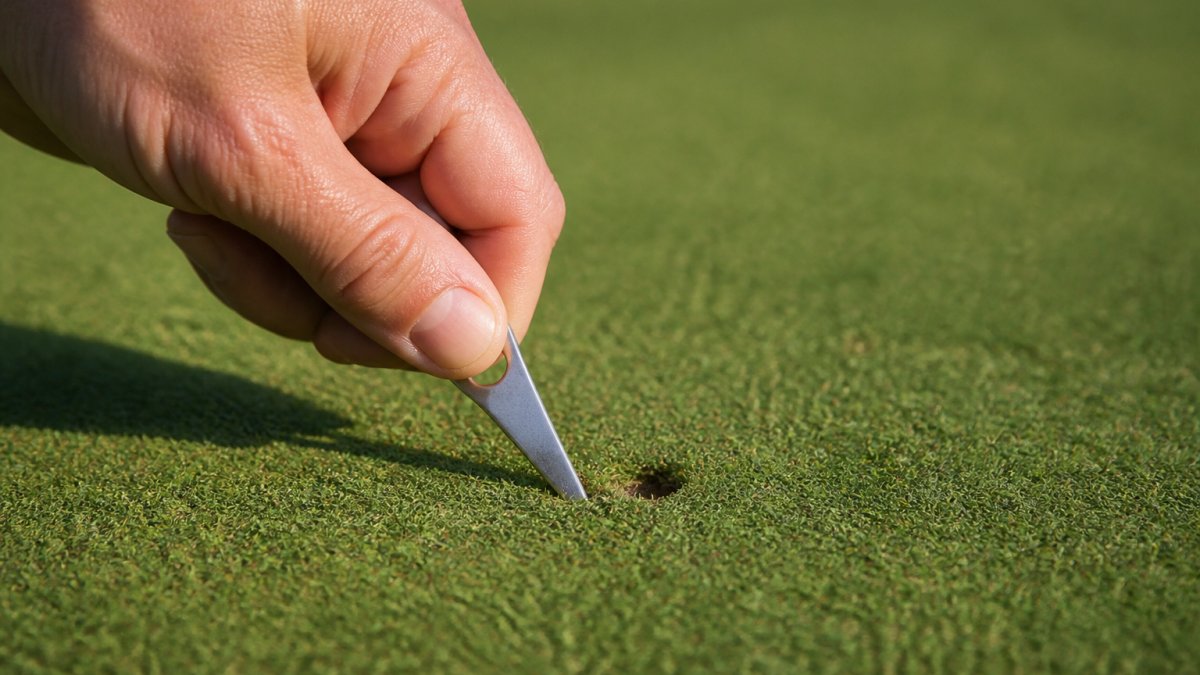
A single-prong design is superior for ball mark repair. One prong allows you to work the grass back toward the center of the mark with precision and control. You can feel the grass responding to your tool. The single prong doesn't create secondary damage outside the original mark because there's only one point of contact.
A two-prong design, while common, has a fundamental flaw: the two prongs are wider apart than the ball mark itself. This means you're inevitably working outside the damaged area, tearing grass that wasn't damaged by the impact. You're creating additional damage while trying to repair the original. Two prongs also make it harder to control the depth and angle of your tool.
The wide-prong design persists because it's easier to manufacture and cheaper to produce. It's also what most golfers are familiar with because cheap divot tools have used this design for decades. Familiarity doesn't make it correct.
A single-prong tool requires more precision in manufacturing to ensure the prong is strong enough to handle the force of green repair without bending. This is why CNC machining matters, the tool must be engineered to be rigid while remaining narrow enough to work within the mark. Sunday Birdie's single-prong design is the result of this engineering requirement.
Pricing, Warranties, and Buying a Divot Tool That Lasts
The cost of a quality personalized golf divot tool ranges based on material, customization, and order volume. Understanding the pricing structure helps you make the right choice for your needs.
A standard personalized golf divot repair tool starts at $35 for a basic model. This price point reflects solid construction and CNC machining.
Customization adds cost. Complex logos or multi-function designs may increase the price depending on the complexity.
Shipping is often free on orders over $50, which means a single tool or a small order of 2-3 tools typically qualifies.
The warranty is where the real value emerges. A lifetime guarantee means the manufacturer stands behind the tool indefinitely. If your divot tool breaks, cracks, or fails to perform, you can replace it at no cost. This is rare in the golf accessory market and reflects confidence in the product's durability.
When comparing divot tools, don't focus on the lowest price. A $10 plastic tool will cost you money in the long run because you'll replace it repeatedly. A $35 precision-engineered tool with a lifetime guarantee is an investment that pays for itself over time. The personalization also adds sentimental value, especially if you're gifting the tool.
| Feature | Budget Tool | Mid-Range Tool | Premium Tool |
|---|---|---|---|
| Material | Plastic | Aluminum | Brass or Aluminum |
| Manufacturing | Molded | Stamped | CNC Machined |
| Durability | 1-2 seasons | 3-5 years | Lifetime |
| Personalization | Limited | Standard | Custom options |
| Warranty | 30 days | 1 year | Lifetime |
| Price | $10-15 | $20-30 | $35+ |
Frequently Asked Questions
What should you look for in a personalized golf divot repair tool?
Prioritize solid construction, brass or aluminum built from solid bar stock outperforms hollow or plastic tools. Choose single-prong design to avoid tearing grass roots. Verify the tool has weight and balance; a heavier divot tool gives better control and a more substantial feel in your hand. If customization matters, confirm the vendor offers engraving of names, initials, or logos before ordering. Finally, check for a lifetime guarantee, it signals the maker stands behind durability.
Are metal divot tools better than plastic ones?
Yes. Metal divot tools, particularly those CNC-machined from solid brass or aluminum, deliver precision, longevity, and performance plastic cannot match. Plastic tools are lighter, wear faster, and often have flawed two-prong designs that damage the green. Metal tools maintain their edge, resist warping, and feel substantial in your hand. The Sunday Birdie Divot Tool, machined from solid bar stock, costs $35 and carries a lifetime guarantee, making the durability advantage clear over time.
Can you personalize a golf divot tool with a name or logo?
Yes. Many quality divot tool makers offer custom engraving for names, initials, or logos. This makes personalized divot tools ideal for gifts, tournaments, or corporate branding. Engraved divot tools are popular tournament giveaways and event gifts because they combine utility with personal or brand identity.
What is the proper way to repair a ball mark on a green?
Insert the divot tool at the edge of the ball mark, not the center. Gently rotate the tool around the perimeter, lifting the grass toward the center without pulling up roots. Avoid two-prong tools that lift and tear; single-prong designs allow controlled rotation and proper healing. Tap down the repaired area lightly with your putter. This technique restores the green correctly and prevents further damage, which is why tool design and technique both matter.
A personalized golf divot repair tool is one of the few golf accessories that improves your game while protecting the course you play on. Sunday Birdie's CNC-machined divot tools deliver the precision, durability, and weight that serious golfers expect. With a lifetime guarantee and custom personalization options, our tools become keepsakes you'll carry for decades. Shop Now, Starting at $35, with free shipping on orders over $50.